Level 2 vs Level 3 Survey: Which Building Survey Do You Need?
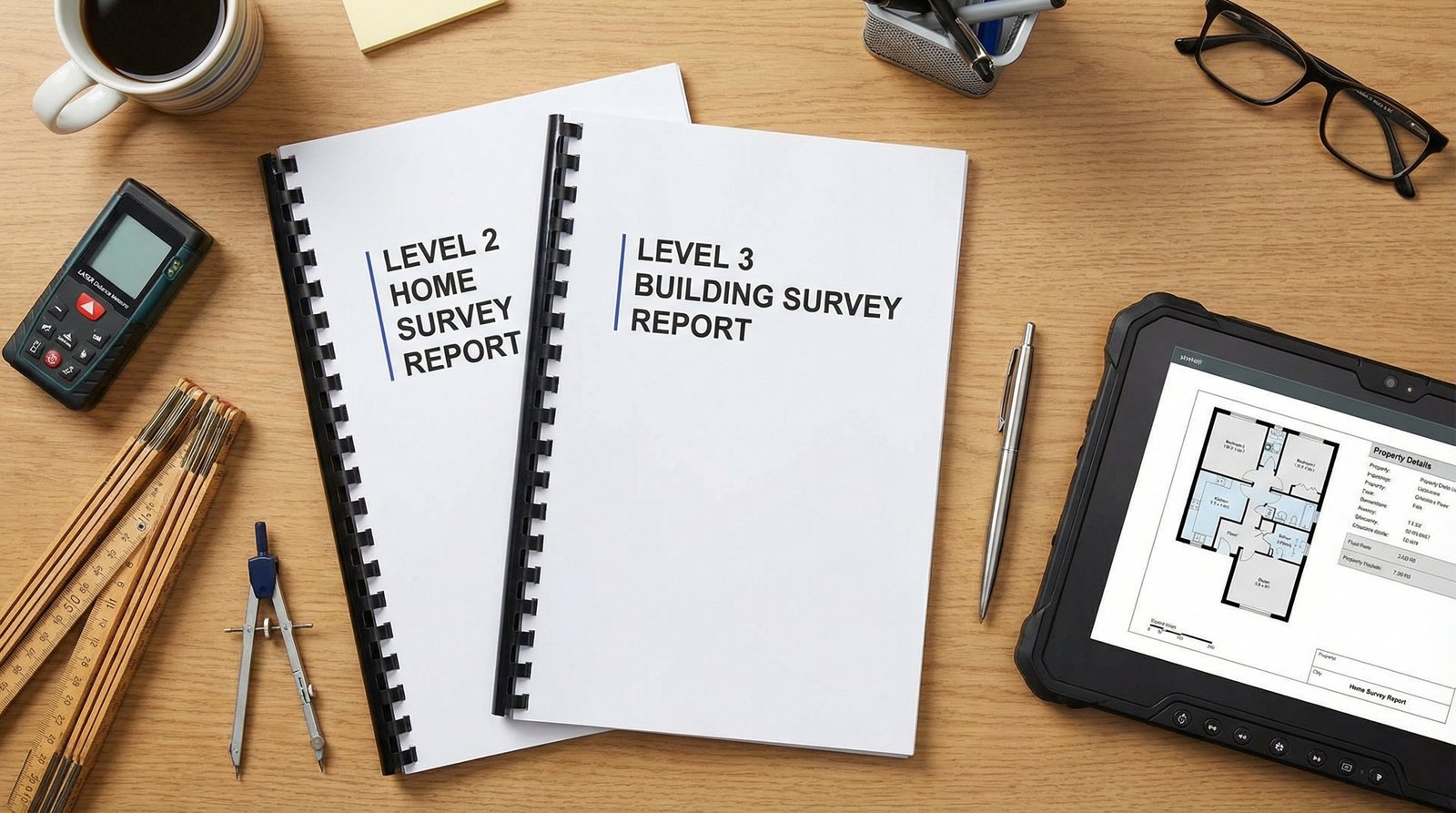
Choosing between a Level 2 homebuyer survey and a Level 3 building survey is one of the most important decisions you'll make when buying a property. As experienced RICS chartered surveyors in Hull, we're frequently asked which survey type is right for different properties. The answer depends on several factors including the property's age, condition, construction type, and your plans for the building.
In this comprehensive guide, we'll explain exactly what each survey includes, compare their key differences, break down the costs, and help you make an informed decision about which survey is right for your property purchase in Hull and East Yorkshire.
Understanding RICS Survey Levels
The Royal Institution of Chartered Surveyors (RICS) standardizes building surveys across the UK into three distinct levels. Most property buyers will choose between Level 2 and Level 3 surveys, as these provide the detailed information needed to make confident purchasing decisions.
Why the Right Survey Matters
Choosing the appropriate survey level is crucial because:
- An insufficient survey may miss critical defects that cost thousands to repair
- Over-surveying wastes money on unnecessary detail for straightforward properties
- The right survey gives you accurate information for negotiation
- Comprehensive surveys provide peace of mind about your investment
- Survey findings influence mortgage lending decisions
- Detailed reports help you budget for future maintenance
RICS Level 2 Homebuyer Survey Explained
The Level 2 homebuyer survey (formerly called the HomeBuyer Report) is the most popular choice for residential property buyers in Hull. It provides a comprehensive overview of the property's condition without the extensive detail of a full building survey.
What's Included in a Level 2 Survey
A Level 2 homebuyer survey includes:
- Visual inspection of all accessible areas of the property
- Assessment of main elements including structure, exterior, and interior
- Traffic light rating system (Condition 1, 2, 3) for easy understanding
- Identification of urgent defects requiring immediate attention
- Details of significant issues that may affect the property value
- Matters requiring further investigation by specialists
- Advice on repairs, ongoing maintenance, and potential risks
- Optional market valuation for mortgage purposes
- Optional reinstatement cost assessment for insurance
The Traffic Light Rating System
Level 2 surveys use a simple color-coded system to prioritize issues:
- Condition 1 (Green): No repair currently needed. The element is performing as intended and is structurally sound.
- Condition 2 (Amber): Defects that need repairing or replacing but are not considered to be either serious or urgent. You should factor repair costs into your budget.
- Condition 3 (Red): Defects that are serious and/or need to be repaired, replaced or investigated urgently. These require immediate attention or very soon after purchase.
When to Choose a Level 2 Survey
A Level 2 homebuyer survey is appropriate for:
- Conventional houses, flats, and bungalows in reasonable condition
- Properties built within the last 100 years using standard construction methods
- Modern homes less than 15 years old without significant defects
- Properties that haven't been significantly altered or extended
- Standard Victorian and Edwardian terraces in good condition
- Semi-detached and detached homes of typical construction
- Most properties across Hull's suburban areas like Cottingham and Hessle
Level 2 Survey Example
We recently conducted a Level 2 survey on a 1930s semi-detached property in Hull. The traffic light system quickly highlighted amber-rated roof tiles needing attention within 2 years (estimated £2,500) and red-rated damp in the rear extension requiring immediate investigation (estimated £5,000-£8,000). This clear prioritization helped the buyers negotiate a £6,000 price reduction and plan their renovation budget effectively.
Level 2 Survey Costs in Hull
The cost of a Level 2 homebuyer survey in Hull and East Yorkshire typically ranges from:
- Flats and apartments: £400-£500
- Terraced houses: £450-£550
- Semi-detached properties: £500-£650
- Detached houses: £600-£750
Factors affecting cost include property value, size, location, and whether you add optional valuations. The investment typically represents just 0.2-0.3% of the property's value - minimal compared to the potential savings from identifying defects.
RICS Level 3 Building Survey Explained
The Level 3 building survey (formerly the Full Structural Survey) provides the most comprehensive analysis available. This detailed inspection is essential for older properties, unusual buildings, or properties in poor condition.
What's Included in a Level 3 Survey
A Level 3 building survey includes everything from a Level 2 survey, plus:
- Extensive inspection of all accessible areas, including roofspaces and underfloor areas where safe
- Detailed analysis of construction methods and materials
- Comprehensive structural assessment with technical explanations
- In-depth investigation of visible defects and potential hidden issues
- Detailed descriptions of repairs needed with urgency ratings
- Indicative costs for major remedial works
- Specialist recommendations for further investigations if required
- Analysis of any alterations, extensions, or conversions
- Assessment of services (heating, electrics, plumbing) condition
- Photographs documenting key issues and defects
The Detail Level Difference
Unlike Level 2 surveys, Level 3 reports provide:
- Technical explanations of construction and how elements interact
- Detailed descriptions rather than simple ratings
- Analysis of why defects have occurred, not just identification
- More time spent on-site (4-6 hours vs 2-4 hours for Level 2)
- Greater focus on fabric of the building and structural integrity
- Specific guidance on renovation priorities if you're planning works
When to Choose a Level 3 Survey
A Level 3 building survey is essential for:
- Properties built before 1900, including Victorian, Georgian, or older
- Listed buildings or properties in conservation areas (common in Beverley)
- Buildings of unusual construction or non-standard materials
- Properties that have been significantly altered, extended, or converted
- Buildings in poor or dilapidated condition
- Properties where you're planning major renovation or refurbishment
- Buildings with known structural issues like subsidence or movement
- Commercial buildings being converted to residential use
- Period properties throughout Hull's Old Town
- Large or complex properties where detailed understanding is crucial
Level 3 Survey Example
A client considering purchasing an 1870s Victorian townhouse in Beverley wisely chose a Level 3 survey. Our detailed inspection revealed historic structural movement that had been arrested, original timber floors in good condition but requiring treatment, a hidden roof valley gutter causing internal dampness, and lead pipework requiring replacement. The comprehensive report provided renovation cost estimates totaling £35,000, allowing informed negotiation and realistic budget planning. A Level 2 survey would have identified issues but wouldn't have provided the technical detail needed for such a complex period property.
Level 3 Survey Costs in Hull
Level 3 building survey costs in Hull and East Yorkshire typically range from:
- Terraced period properties: £700-£900
- Semi-detached period homes: £800-£1,000
- Detached period properties: £900-£1,200
- Large or complex buildings: £1,200-£1,800+
While Level 3 surveys cost more than Level 2 surveys, they're invaluable for older or complex properties where detailed understanding is essential for making an informed purchase decision.
Direct Comparison: Level 2 vs Level 3
Decision Matrix: Which Survey Do You Need?
Use this decision matrix to determine which survey is right for your situation:
Choose Level 2 If Your Property:
- Was built after 1900 using conventional construction
- Appears in reasonable condition during viewings
- Is of standard construction (brick/block walls, tiled roof)
- Has no obvious structural defects or significant alterations
- Is a modern build less than 15 years old
- Matches typical housing in the area
- You're not planning major renovation works
Choose Level 3 If Your Property:
- Was built before 1900 or is of period construction
- Is listed or in a conservation area
- Shows visible signs of structural movement or defects
- Has unusual construction or non-standard materials
- Has been significantly extended, altered, or converted
- Is in poor or deteriorating condition
- You're planning substantial renovation or refurbishment
- You need detailed technical information for project planning
Hull and East Yorkshire Specific Considerations
When deciding between survey levels for properties in Hull, Beverley, and East Yorkshire, consider these local factors:
Hull Property Characteristics
- Old Town: Predominantly Georgian and Victorian properties requiring Level 3 surveys
- Victorian Terraces: Common across Newland and central Hull - Level 2 usually sufficient if in good condition
- Suburban Areas: Cottingham, Hessle, and Anlaby feature mainly 20th-century housing suited to Level 2
- Modern Developments: Kingswood and similar areas with new builds - Level 2 appropriate
- Flood Risk Areas: Properties near the Humber may benefit from Level 3's detailed drainage assessment
Beverley Considerations
- Historic town center contains many listed buildings requiring Level 3 surveys
- Conservation area restrictions make detailed surveys essential
- Period properties with original features need comprehensive assessment
- Modern developments on town outskirts suited to Level 2
Cost vs Value: Is the Extra Investment Worth It?
Many buyers wonder if paying extra for a Level 3 survey is justified. Consider these factors:
When Level 3 Extra Cost Pays Off
- Identifies Hidden Issues: Detailed inspection reveals problems a visual survey would miss
- Negotiation Power: Comprehensive reports with cost estimates strengthen price negotiations
- Renovation Planning: Detailed technical information is invaluable for planning works
- Budget Accuracy: Prevents nasty surprises by identifying all necessary repairs upfront
- Peace of Mind: Thorough understanding of the property removes uncertainty
For a £250,000 Victorian property, the £300-400 difference between Level 2 and Level 3 surveys is negligible compared to potential repair costs that could reach tens of thousands of pounds.
What Neither Survey Includes
It's important to understand that neither survey type includes:
- Testing of electrical systems (requires separate electrical safety inspection)
- Testing of gas or heating systems (requires Gas Safe registered engineer)
- Asbestos testing (requires specialist asbestos survey if suspected)
- Invasive investigation (no lifting floorboards or removing fixtures)
- Areas not reasonably accessible on the day
- Covered, concealed, or inaccessible parts of the structure
If your survey recommends specialist investigations, our team can coordinate these additional inspections or recommend trusted specialists across Hull and East Yorkshire.
Making Your Decision
Choosing the right survey level is crucial for informed property purchasing. As a general rule:
- If your property is straightforward, conventional, and less than 100 years old, Level 2 is usually adequate
- If you have any doubt, concerns about condition, or it's a period property, invest in Level 3
- When in doubt, consult with a RICS chartered surveyor before booking
Our team at Hull Surveyors is always happy to discuss which survey level is most appropriate for your specific property during a free consultation call.
Conclusion
Both Level 2 homebuyer surveys and Level 3 building surveys serve important roles in property purchases. Level 2 surveys offer excellent value for standard properties in reasonable condition, providing comprehensive overview and peace of mind. Level 3 surveys deliver essential detailed analysis for older, unusual, or complex properties where thorough understanding is crucial.
The key is matching the survey level to your property's characteristics, your concerns, and your plans. Investing in the appropriate survey protects your property purchase, provides negotiation leverage, and ensures you're fully informed about the condition of what may be your biggest financial commitment.
Remember, the survey cost represents a tiny fraction of your property's value but can save you thousands - or even tens of thousands - in unexpected repair costs.
Need Help Choosing the Right Survey?
Our experienced RICS chartered surveyors in Hull can advise which survey level is best for your property. We'll explain the options, discuss your specific needs, and provide a no-obligation quote.
Get Your Free Survey Consultation