10 Common Property Defects We Find in Hull Homes
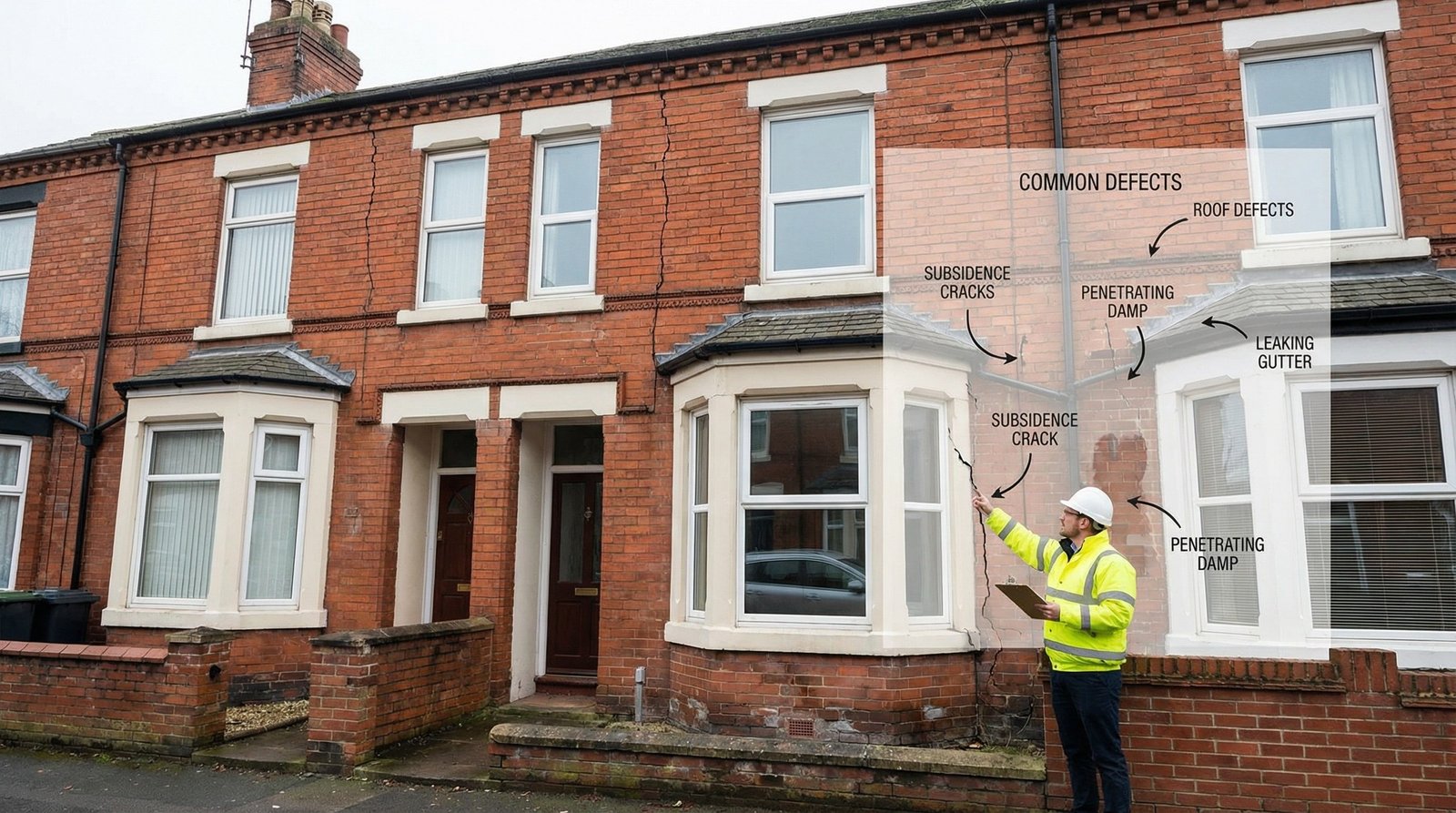
After surveying hundreds of properties across Hull, Beverley, and East Yorkshire, our RICS chartered surveyors have developed extensive knowledge of the most common defects affecting homes in this region. Understanding these issues helps property buyers know what to look for, what questions to ask sellers, and why professional building surveys are so valuable.
In this comprehensive guide, we'll walk through the ten most frequently encountered property defects in Hull homes, explain their causes, outline typical repair costs, and advise on their significance for property buyers. Whether you're purchasing a Victorian terrace in Newland or a modern semi in Cottingham, being aware of these common issues will help you make informed decisions.
1. Rising Damp in Victorian and Edwardian Properties
Rising damp is perhaps the most common serious defect we encounter in Hull's older properties, particularly Victorian and Edwardian terraced houses built before effective damp-proof courses became standard.
What Is Rising Damp?
Rising damp occurs when groundwater rises up through porous building materials (bricks, mortar, plaster) by capillary action. It typically affects walls up to about 1 meter above ground level.
Signs of Rising Damp
- Tide marks on internal walls showing water damage
- Peeling or bubbling paint and wallpaper at low levels
- Crumbling or salt-damaged plaster (efflorescence)
- Damp, musty smell in affected rooms
- Rotting skirting boards and floor timbers
- Dark patches on walls that feel cold and damp
- White salt deposits on wall surfaces
Common Causes in Hull Properties
- Failed or absent damp-proof course (DPC)
- Bridged DPC from raised external ground levels
- Porous brickwork in older properties
- Cement pointing or renders preventing wall "breathing"
- Damaged or missing DPC membrane
Typical Repair Costs
- Chemical DPC injection: £1,500-£3,000 per affected wall
- Re-plastering affected areas: £800-£2,000
- Total rising damp treatment: £2,500-£5,000 typically
Hull Example: Victorian Terrace
We recently surveyed a Victorian terrace in Hull's Newland area where rising damp affected the entire front room ground floor. Investigation revealed the external ground level had been raised during paving work, bridging the original DPC. The raised paving was directing rainwater against the wall. Solution required lowering external ground level, installing drainage, and treating internal damp damage - total cost £4,200.
2. Roof Defects and Water Ingress
Roof problems are consistently among the most expensive defects we identify, and Hull's weather conditions accelerate roof deterioration.
Common Roof Issues
- Slipped, cracked, or missing roof tiles exposing felt
- Perished roof felt allowing water penetration
- Failed valley gutters (common in terraced properties)
- Deteriorated flashing around chimneys and abutments
- Sagging roof structure indicating timber decay
- Blocked or damaged gutters causing overflow
- Poor quality previous repairs using incorrect materials
Why Hull Roofs Suffer
- Exposure to North Sea weather and strong winds
- High rainfall affecting older roof coverings
- Salt-laden air near the Humber causing material degradation
- Aging housing stock with original 100+ year old roofs
Typical Repair Costs
- Minor roof repairs: £500-£1,500
- Valley gutter replacement: £1,000-£2,500
- Re-roofing terraced house: £5,000-£8,000
- Re-roofing semi-detached: £7,000-£12,000
- Structural timber repairs: £2,000-£5,000 additional
3. Structural Movement and Cracking
Victorian terraces throughout Hull commonly exhibit structural movement, though not all movement is serious or progressive.
Types of Cracking We See
- Stepped cracking following mortar joints (often historic settlement)
- Vertical cracks at weak points (windows, doors)
- Diagonal cracks indicating possible subsidence
- Horizontal cracks suggesting wall tie failure
- Internal plaster cracking (often thermal movement)
Common Causes in Hull
- Historic settlement in older properties (arrested movement)
- Clay soil shrinkage during dry periods
- Tree root activity near foundations
- Poor original foundations (Victorian construction)
- Leaking drains undermining foundations
- Vibration from traffic on main roads
When to Worry
- Cracks wider than 5mm require investigation
- Progressive movement (widening cracks)
- Recent cracking rather than historic stable cracks
- Associated with door/window sticking or floor slope
Typical Costs
- Structural engineer's report: £500-£800
- Minor crack repairs and repointing: £500-£2,000
- Underpinning (if required): £10,000-£30,000+
4. Electrical System Problems
Many Hull properties, particularly those built or rewired in the 1960s-1980s, have outdated electrical installations requiring upgrading.
Common Electrical Defects
- Old fuse boxes without RCD (residual current device) protection
- Insufficient number of sockets leading to overloading
- Aluminum wiring (1960s-1970s) requiring replacement
- Missing earthing or bonding to water/gas services
- Outdated rubber or fabric-insulated wiring
- No electrical safety certificate available
- DIY alterations not complying with regulations
Why It Matters
- Safety risk - fire hazard and electric shock potential
- Buildings insurance may be affected
- Mortgage lenders increasingly require satisfactory electrics
- Regulations require testing every 10 years for rented properties
Typical Costs
- Electrical safety inspection: £150-£300
- Consumer unit (fuse box) upgrade: £400-£800
- Full rewire 3-bed terrace: £3,000-£5,000
- Full rewire 3-bed semi: £4,000-£6,000
Survey Finding: Unsafe Electrics
During a recent survey in Cottingham, we identified a 1970s fuse box with no RCD protection, aluminum wiring throughout, and several dangerous DIY additions. The electrical safety certificate was over 20 years old. We recommended an urgent electrical inspection and likely full rewire. The buyer used this to negotiate a £4,500 price reduction to cover the essential upgrade works.
5. Defective Drainage Systems
Drainage problems are particularly common in Hull's older terraced properties where original Victorian drains are still in use.
Common Drainage Issues
- Cracked or broken clay drain pipes allowing leakage
- Tree root ingress blocking drains
- Collapsed sections of old pipework
- Shared drainage with neighboring properties causing disputes
- Inadequate falls causing pooling and blockages
- Missing or damaged inspection chambers
- Surface water draining to foul system (illegal and problematic)
Signs of Drainage Problems
- Slow-draining sinks, baths, or toilets
- Gurgling sounds from drainage systems
- Unpleasant smells near drains
- Damp patches in walls near drain runs
- Subsidence adjacent to drains from water leakage
- Pooling water in gardens after rain
Typical Costs
- CCTV drain survey: £200-£400
- Drain unblocking: £100-£300
- Drain repairs (patch lining): £500-£1,500 per section
- Complete drain replacement: £3,000-£8,000
6. Window and Door Deterioration
Original timber windows in older Hull properties and poorly installed UPVC replacements both present common issues.
Timber Window Problems
- Rot in sills, frames, and glazing bars
- Failed putty allowing water penetration
- Poor maintenance leading to paint deterioration
- Single glazing causing heat loss and condensation
- Broken or missing sash cords in period properties
UPVC Window Issues
- Poor installation with inadequate sealing
- Failed double glazing units (misting between panes)
- Cheap quality systems deteriorating quickly
- Inappropriate replacements in period properties
Typical Costs
- Timber window repairs: £200-£500 per window
- Window replacement (UPVC): £400-£800 per window
- Full house UPVC windows (3-bed): £4,000-£7,000
- Timber sash window restoration: £800-£1,500 per window
7. Heating System and Boiler Issues
Aging heating systems are a frequent concern, particularly with increasing emphasis on energy efficiency.
Common Problems
- Boilers over 15 years old approaching end of life
- Non-condensing boilers with poor efficiency
- Inadequate heating for property size
- No recent boiler service certificate
- Old radiators with poor heat output
- Lack of thermostatic radiator valves
- Single-pipe systems in older properties
Typical Costs
- New combi boiler installation: £1,800-£3,000
- System boiler with cylinder: £2,500-£4,000
- New radiators: £150-£400 each installed
- Heating system power flush: £400-£600
8. Penetrating Damp from External Issues
Unlike rising damp, penetrating damp comes from external water ingress through walls, often worsened by Hull's weather exposure.
Common Causes
- Failed or porous external render
- Cracked or damaged brickwork
- Missing or defective pointing
- Failed cavity wall insulation
- Bridged wall cavities from mortar droppings
- Defective window and door seals
- Overflowing or blocked gutters
Typical Costs
- Repointing: £40-£60 per square meter
- External wall repairs: £1,000-£3,000
- Render repairs/replacement: £3,000-£8,000
- Cavity wall insulation extraction: £1,500-£3,000
9. Timber Defects (Rot and Insect Attack)
Damp conditions in older Hull properties create ideal environments for timber decay.
Common Timber Problems
- Wet rot in window frames and door frames
- Dry rot in floor timbers (less common but serious)
- Woodworm infestation in roof timbers and floors
- Decay in structural timbers due to roof leaks
- Skirting board rot from damp walls
Typical Costs
- Timber treatment (woodworm): £500-£1,500
- Dry rot treatment: £2,000-£6,000
- Floor joist replacement: £1,000-£3,000 per room
10. Inadequate Insulation and Energy Efficiency
Older Hull properties often have poor insulation, resulting in high energy bills and condensation issues.
Common Issues
- Missing or insufficient loft insulation
- Solid wall properties with no insulation
- Single glazed windows
- Poor EPC ratings (E, F, or G)
- Drafty properties with air leakage
Impact on Buyers
- Higher heating costs reducing affordability
- Condensation and mold growth risks
- Future regulatory requirements for rental properties
- Reduced property value
Typical Improvement Costs
- Loft insulation: £400-£800
- External wall insulation: £8,000-£15,000
- Internal wall insulation: £4,000-£8,000
- Double glazing: £4,000-£7,000 full house
The Importance of Professional Surveys
These ten common defects demonstrate why professional building surveys are so valuable. Our RICS chartered surveyors are trained to identify, assess, and advise on all these issues, providing you with:
- Expert identification of defects you might miss
- Assessment of defect severity and urgency
- Realistic cost estimates for repairs
- Negotiation leverage with sellers
- Peace of mind about your property investment
- Prioritized maintenance planning
Hull-Specific Considerations
Properties across Hull face particular challenges:
- Coastal weather exposure accelerating deterioration
- High proportion of Victorian housing stock
- Clay soil conditions affecting foundations
- Flood risk areas requiring additional checks
- Historic mining activities in some areas
Conclusion
Understanding these common property defects helps you approach property buying with realistic expectations. While finding defects can feel discouraging, remember that most are repairable at reasonable cost, and professional surveys protect you by revealing problems before you commit to purchase.
The key is identifying defects early through a comprehensive RICS building survey, understanding their implications, and factoring repair costs into your budget or purchase negotiations. What appears perfect during a viewing can hide significant problems - only professional inspection reveals the full picture.
Whether you're buying a Victorian terrace in Hull's Old Town, a suburban semi in Cottingham, or a period property in Beverley, investing in a proper survey is the best protection against unexpected repair costs and ensures you know exactly what you're buying.
Concerned About Property Defects?
Our experienced RICS chartered surveyors thoroughly inspect Hull properties for all common defects, providing detailed reports and cost estimates. Protect your property investment with a professional survey.
Book Your Building Survey Today